

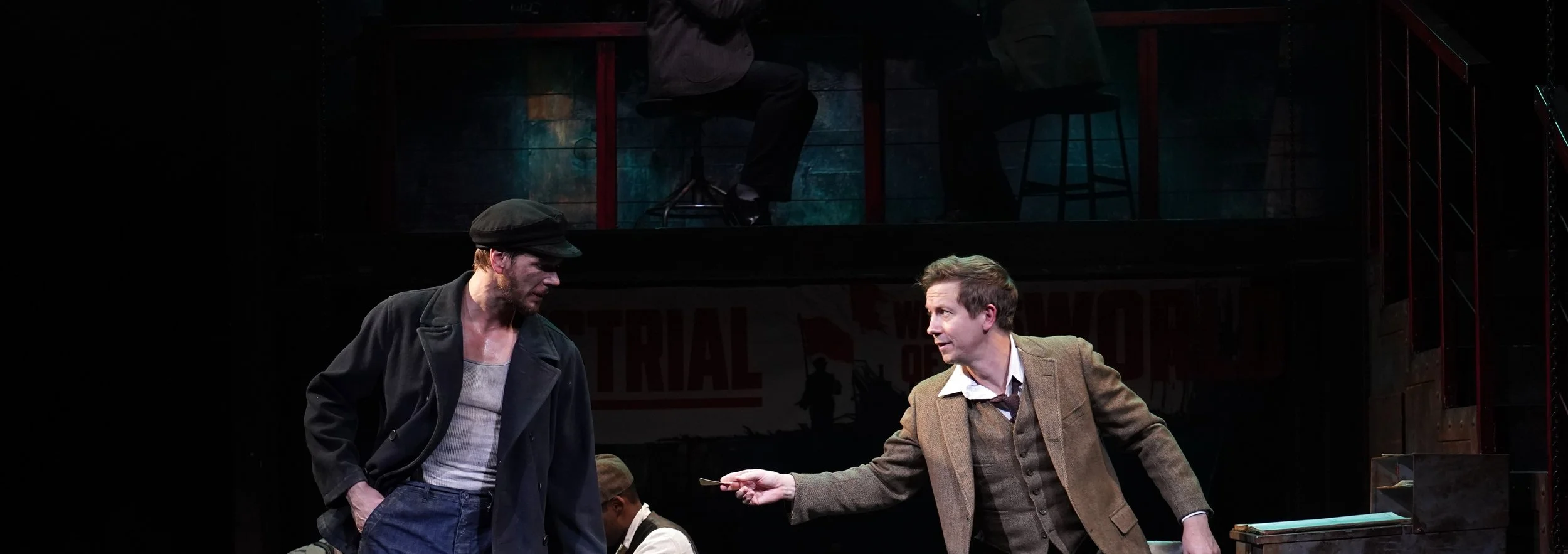
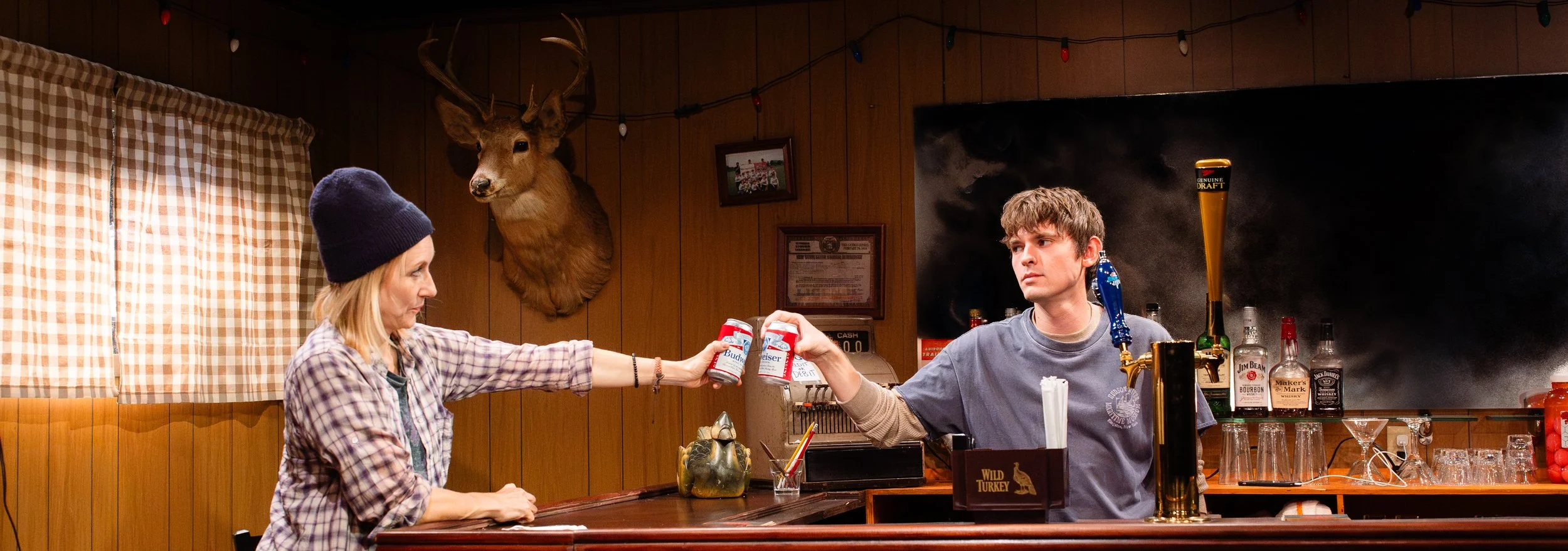
For the first two scenes of Max Wolf Friedlich’s The Holes, the intrigue builds carefully, as a bartender named Joey Alexander (Bubba Weiler) hangs around his cozy but empty establishment on a snowy night. He soon has a visitor, a man (Grantham Coleman) calling himself “Paul,” who hands him an envelope full of cash and an ID that identifies him otherwise: as someone named Wesley. The cash gains Wesley entrée into the back room of the dive bar—in spite of arriving long after his assigned time. “Next time don’t be late,” says Weiler’s stern Joey, adding, “12:24 is not the same as 11:30.” What is behind that door constitutes a mystery that drives the narrative of The Holes. Friedlich calls his play a “fairy tale,” but the gay-inflected twaddle that follows is a far cry from Hans Christian Andersen.

