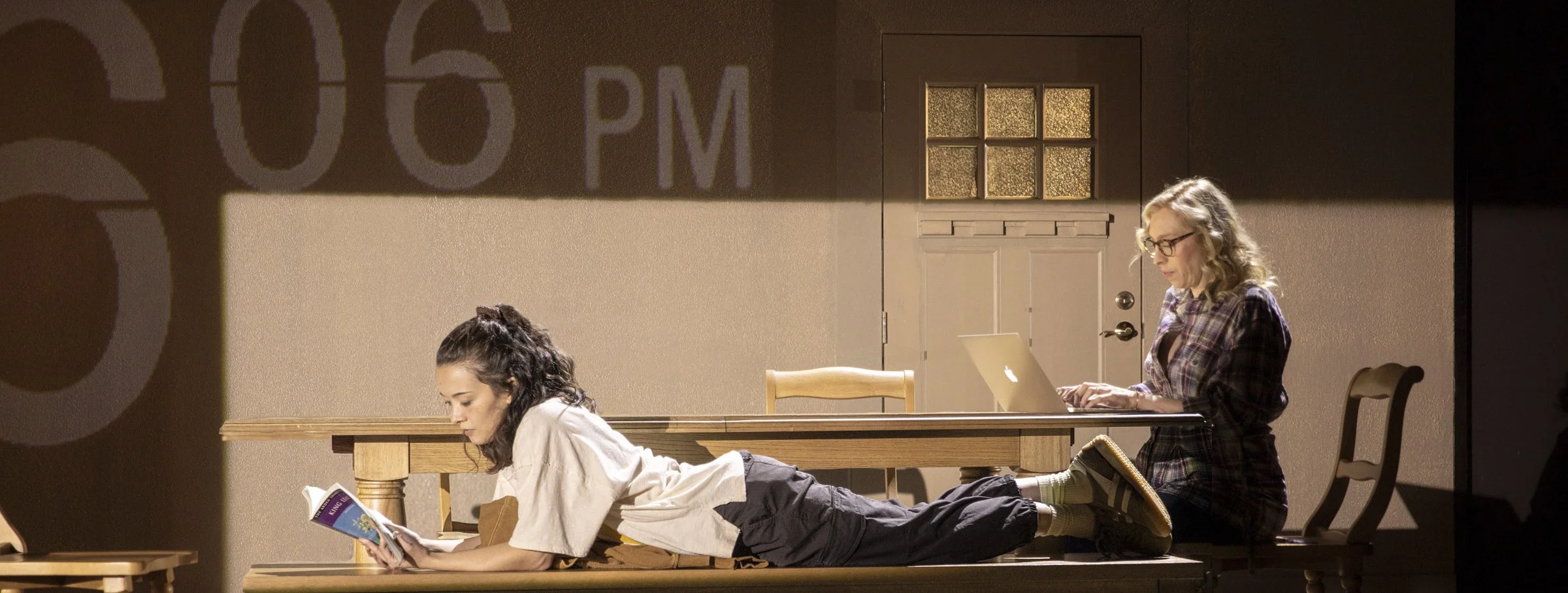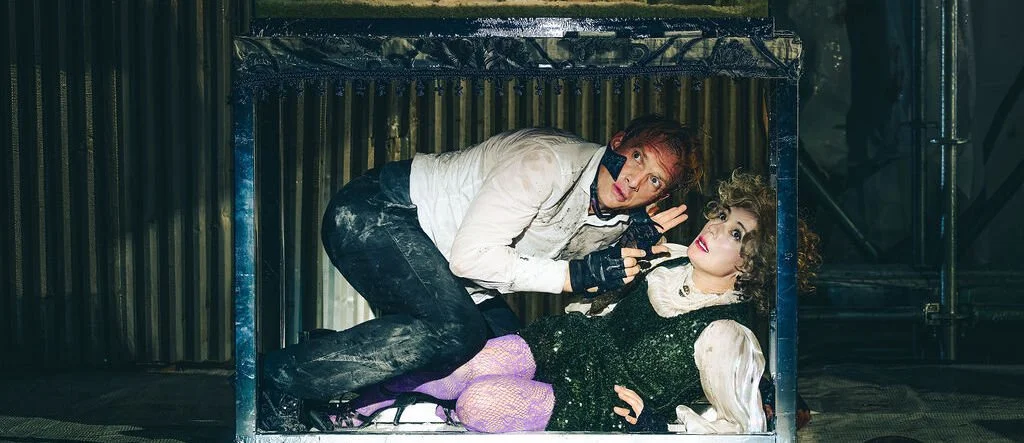

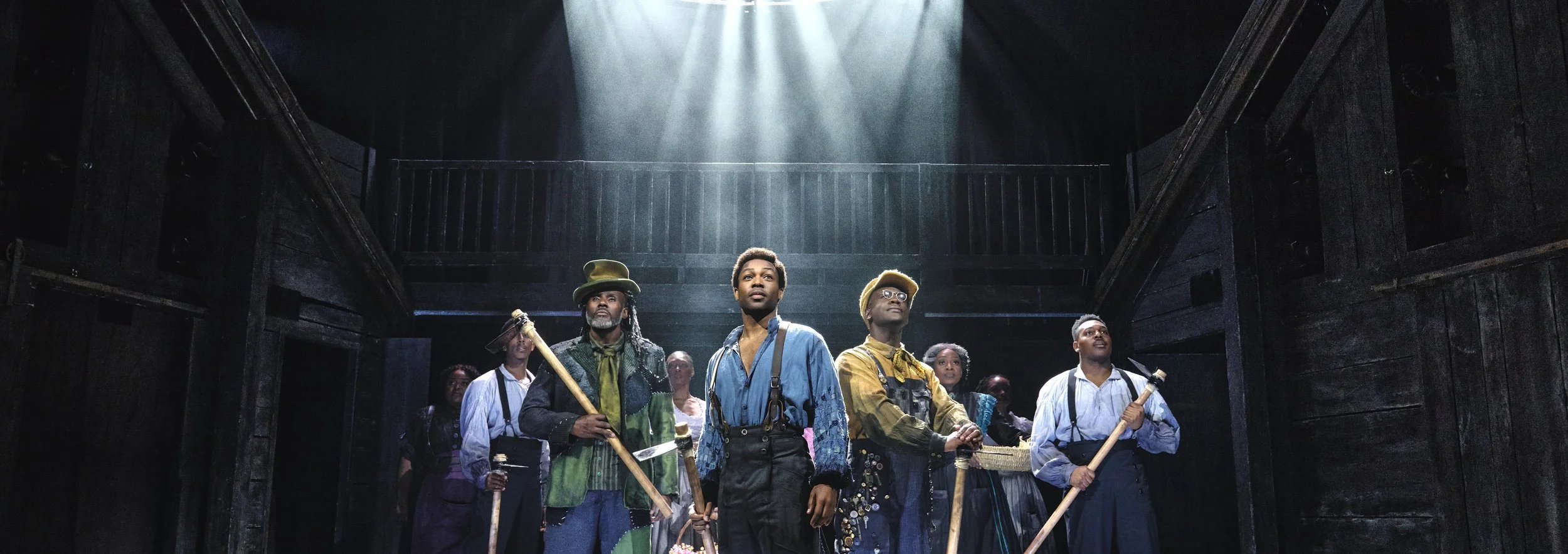
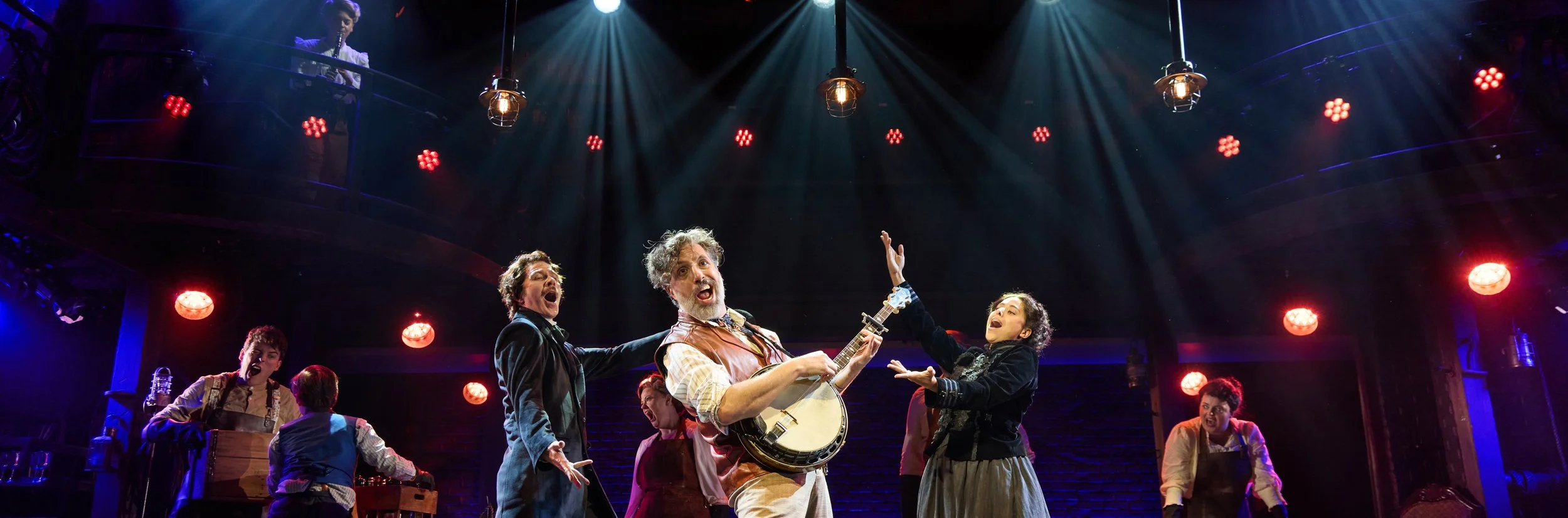
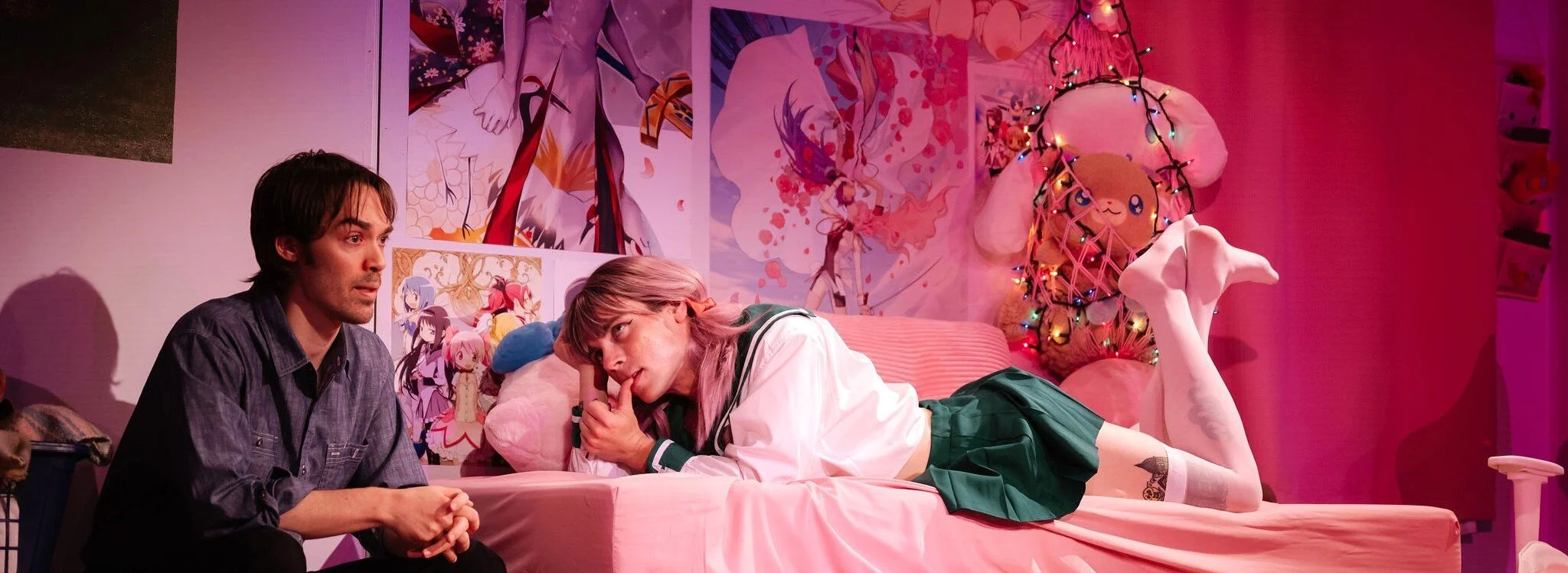
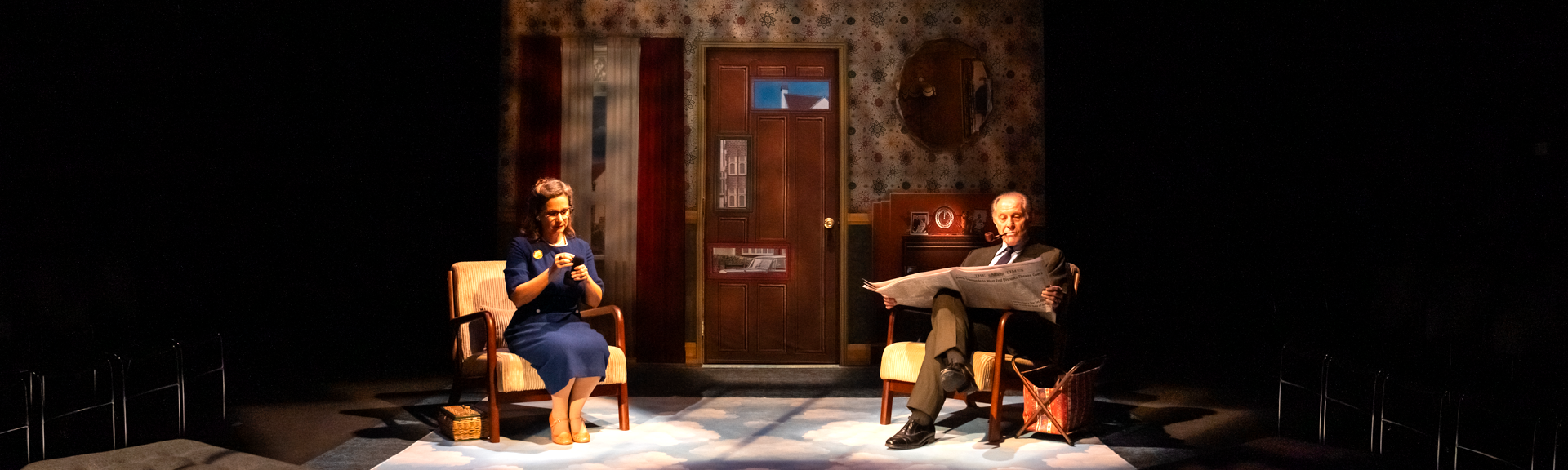
At the outset of Alexander Zeldin’s The Other Place, a funerary urn, unburied but long ignored, sets off a near-nuclear explosion of familial conflict. It’s a humdinger of a beginning; but, as this short, bleak drama proceeds, the motives of the principal characters remain obscure and the twists in the plot, though often startling, can’t conceal the script’s logical lacunae. It’s a striking weakness, since The Other Place is inspired by Sophocles’s Antigone, a compact, laser-focused tragedy that’s intellectually and emotionally satisfying.
Hate Radio
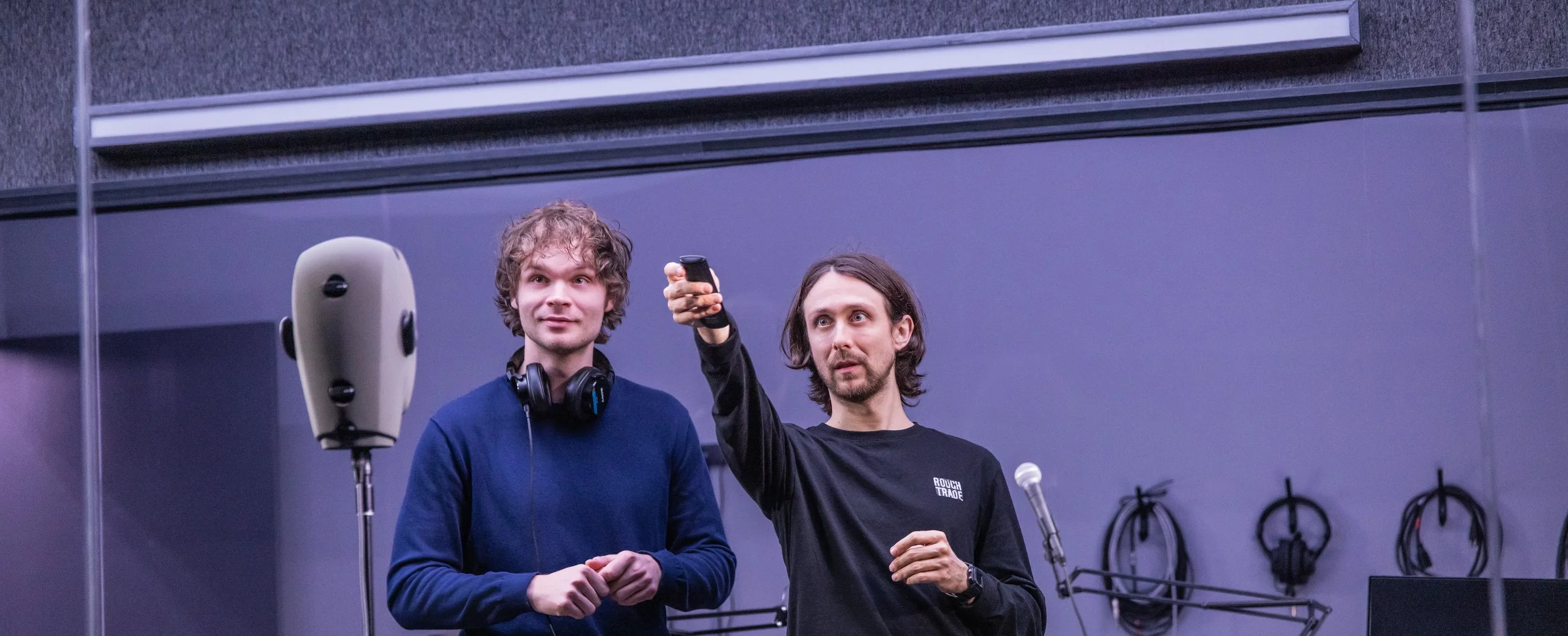
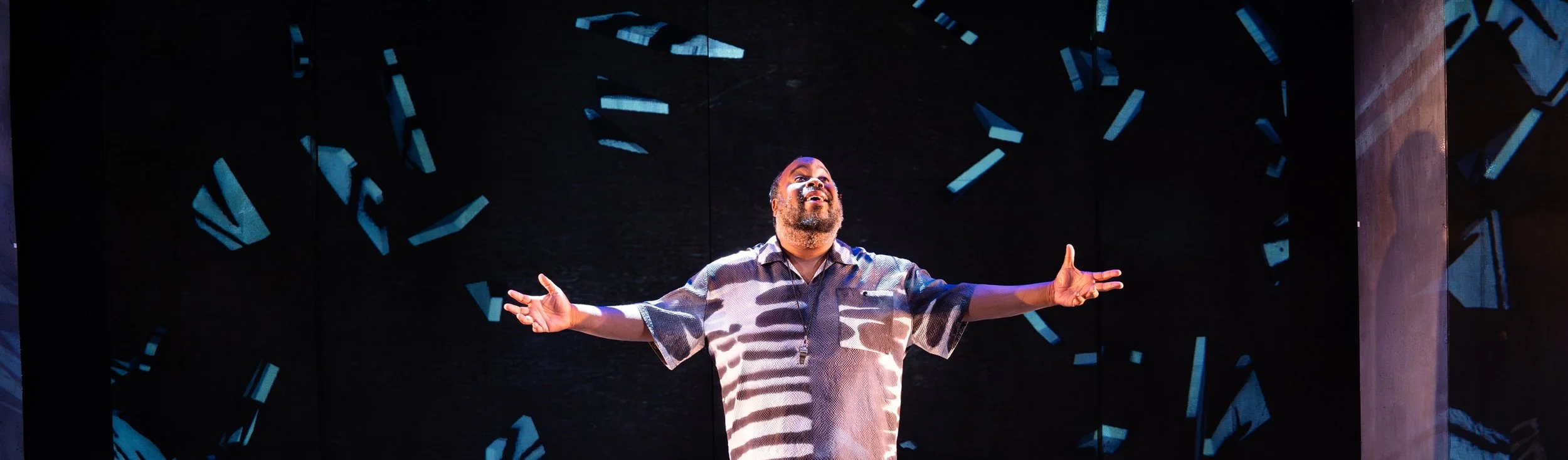
In Hate Radio, Swiss writer-director Milo Rau turns the stage into a time capsule of terror, reconstructing the Rwandan radio station RTLM (Radio Télévision Libre des Mille Collines), whose jovial hate-fueled broadcasts paved the road to genocide. Listening through headsets as slurs curdle into directives, the audience is left to reckon not only with history’s horrors but with unnerving echoes in today’s media-saturated America.
The Waterfall
The same week Haiti was represented in Winter Olympics competition for only the second time in history, WP Theater made its contribution to Haitian pride with the world premiere of The Waterfall, a Haitian American family drama written by Phanésia Pharel, the daughter of Haitian immigrants.
Beneath the Ice of the Vistula
In Roman Freud’s Beneath the Ice of the Vistula, a Polish-Jewish composer named Adam Kobylanski agonizes over a musical composition that he is sure will be a masterpiece. The year is 1939. The Nazi invasion looms on the horizon but is still far enough away that Adam has the time and space to work on his composition in peace.
The Dinosaurs
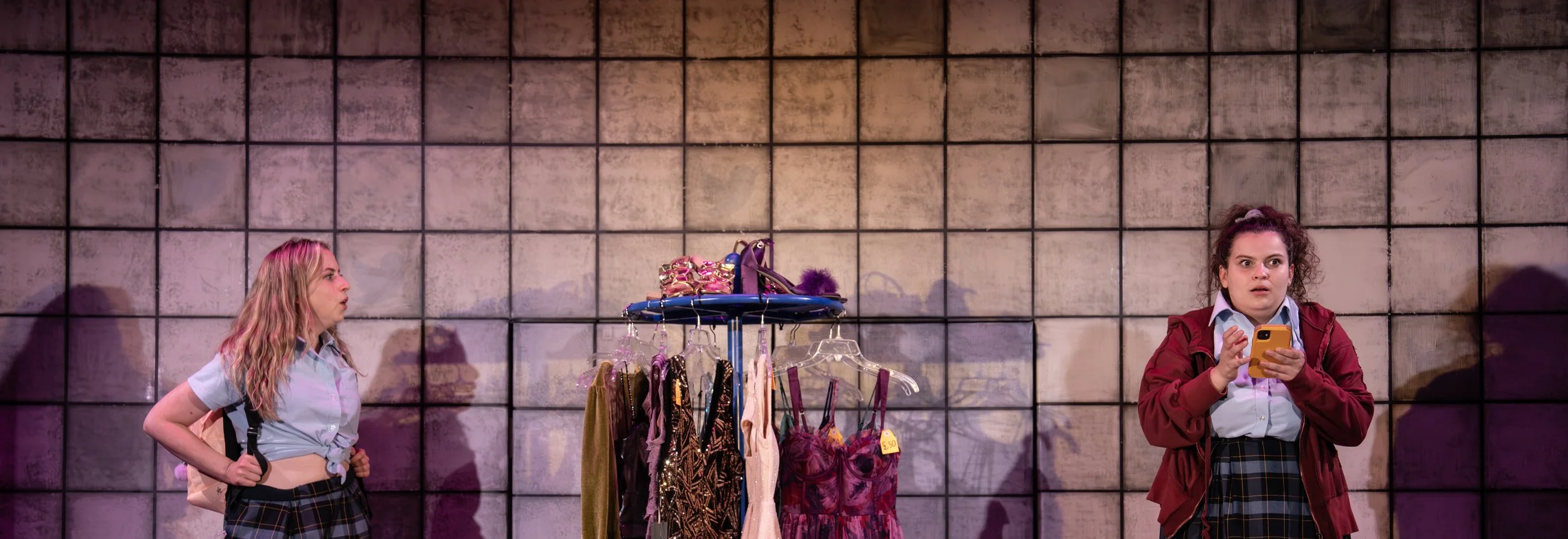
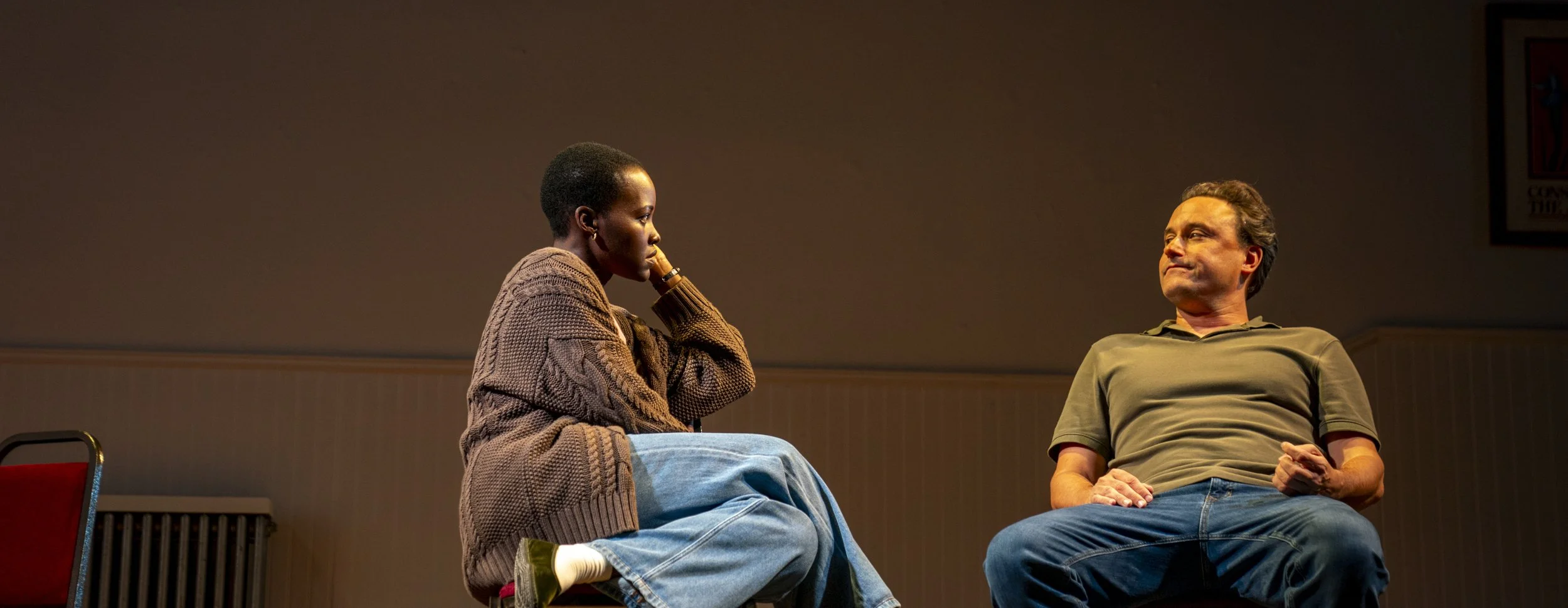
Jacob Perkins’s The Dinosaurs is a meditation on sobriety and female friendship. It unfolds within a women’s and trans-inclusive alcohol-recovery group dubbed the Saturday Survivors, a nod to the day of the week they meet over coffee, scones, and doughnuts in a bland, white, windowless community room with folding chairs (scenic design by dots). Under Les Waters’s direction, the 70-minute play, which features a remarkable ensemble of actors, slides from a naturalistic mode into an experimental one, as time and identity are upended. The experiment, however, proves frustratingly vague rather than provocative.
The Tragedy of Coriolanus
The setting for the Theatre for a New Audience’s production of The Tragedy of Coriolanus is “just after now.” Teeming with multimedia elements, including combat surveillance footage, a four-sided video screen suspended above the stage, and computer-generated imagery (CGI), the conceit effectively mirrors how contemporary politics and war are manipulated by selective images and social media. The drawback to this interpretation is that the volatile relationship between the ruling elite and the common people, so central to Shakespeare’s play, feels elusive and out-of-reach in this nominally futuristic world.
The Monsters
Mixed Martial Arts (MMA) is the ostensible subject of Ngozi Anyanwu’s taut two-hander The Monsters, now running Off-Broadway at Manhattan Theater Club after a fall stint at Two River Theater in New Jersey—but the play’s true combat is emotional. Beyond the excellent choreography and fight direction (by Rickey Tripp and Gerry Rodriguez, respectively), the deeper exhilaration stems from seeing two actors, Aigner Mizzelle as Lil and Okieriete Onaodowan as her big brother Big, deliver beautifully realized performances.
Hold On to Your Butts
Hold On to Your Butts, directed by Kristin McCarthy Parker, proves that epic spectacle can be conjured from little more than bodies, sound effects, and boundless imagination, as two actors and a sound-effects artist recreate Jurassic Park shot for shot, live onstage. The result is an exuberant collision of physical comedy, sound, and affectionate parody—a love letter to both movies and theater.
Not Nobody
Not Nobody, written by Brian Dykstra, is a play about ethics and the legal system. Under the direction of Margaret Perry, the work centers on McAlester Daly (Dykstra himself), a former ethics professor. One evening, he is out walking when a couple of cops—Officer Ricketts (Sheffield Chastain, who deftly plays a wide range of characters) and Officer Chavana (Kathiamarice Lopez, who brings a crispness to every role she plays)—stop him. He’s in a neighborhood where a middle-aged white guy typically wouldn’t be, and the cops find that odd.
An Ideal Husband
“Behind every great fortune lies a great crime” is a quotation attributed to French novelist Honoré de Balzac, but it applies directly to the plot of Oscar Wilde’s An Ideal Husband (1895). Written close to Wilde’s peak—it opened just a month before The Importance of Being Earnest—Husband fizzes with epigrams and uses heightened language to expose hypocrisy. The Storm Theatre is brave to tackle the work, packed both with melodrama and wit, but to succeed, as Sir Peter Hall did with his Broadway production 30 years ago, requires skills and experience that it can’t altogether muster.
I Wish My Life Were Like a Musical
In I Wish My Life Were Like a Musical, written by Alexander S. Bermange and directed by Eamon Foley, four talented performers share their love of musicals—even though their show has just closed unexpectedly. The plucky quartet spends the ensuing 75 minutes delightfully recounting their personal reasons for loving theater while spoofing some of the most popular musicals of all time. Their commitment to the genre is infectious. And even though their love is temporarily unrequited, they wave the banner of devotion like Jean Valjean from Les Misérables, one of the many shows parodied.
Ai Yah Goy Vey!
In his solo show Ai Yah Goy Vey!, Richard Chang celebrates multicultural New York through the fictional tale of a Chinese man’s borough-hopping search for the father he has never met. But his picaresque is peppered with questionable jokes and portrayals, and, despite an impressive array of costumes, props and video backdrops, the production has an amateurish air to it.
Blackout Songs
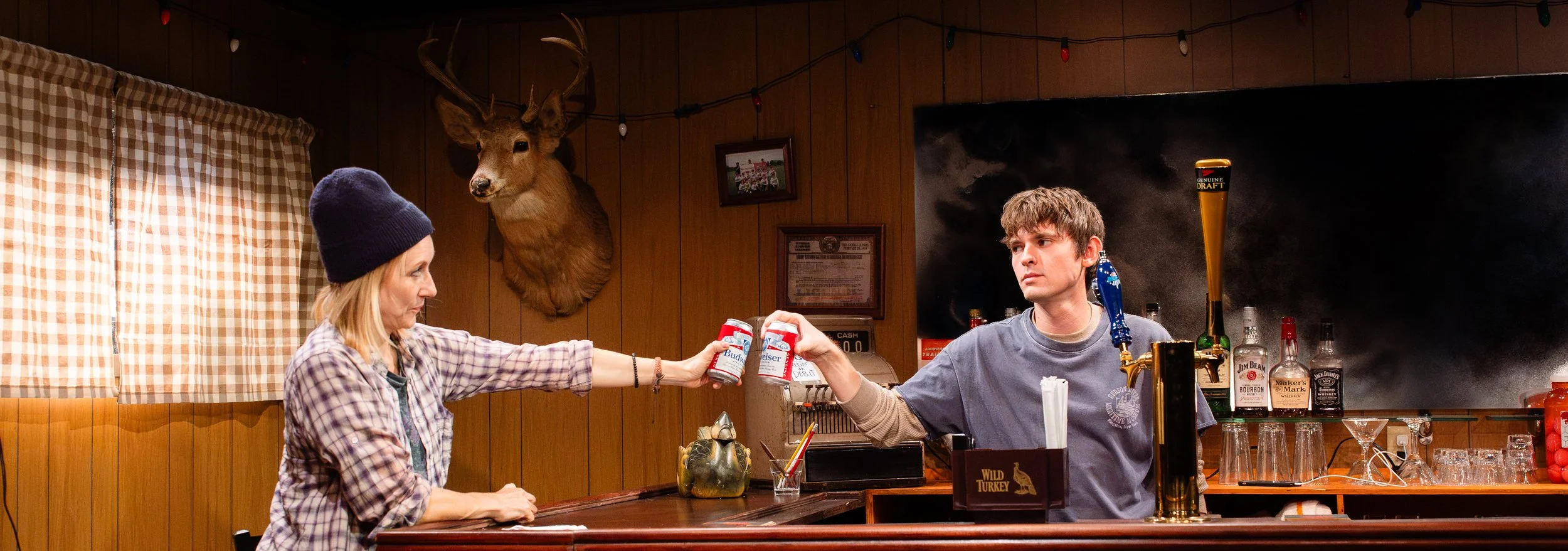
Joe White’s Blackout Songs, nominated for an Olivier Award in 2023 and now playing Off-Broadway, depicts the convulsive romance of Alice and Charlie, who meet at the coffee urn of an Alcoholics Anonymous (AA) meeting and rush headlong into the squalid territory of pop-modernist classics such as The Lost Weekend and Days of Wine and Roses. Drunken-wastrel love is an old story, but White—with skilled assistance from director Rory McGregor and a team of very good theatrical designers—gives this short, insightful drama a 21st-century sheen.
Hans Litten: The Jew Who Cross-Examined Hitler
“My goal is to write plays with exciting stories, smart characters and sharp dialogue. The reviewers report that my plays are full of philosophical ideas. So be it. I’m tired of plays about dysfunctional families and jumbled identities. For me, ideas are more exciting.” So goes the program bio of Douglas Lackey, author of Hans Litten: The Jew Who Cross-Examined Hitler, a new historical drama at Theater Row. And he’s true to his words, or at least two of them: “philosophical ideas” dominate, sometimes at the expense of character development, tension, and atmosphere. What’s onstage isn’t uninvolving or unmoving, but one is very aware of what’s missing.
Anonymous
Playwright Nick Thomas’s powerful Anonymous centers on a weekly meeting of an addiction support group. Skillfully crafted to highlight the strength of community and recovery, Anonymous focuses on diverse characters who speak about their lives while seeking support from their fellow addicts. All the participants have secrets, protecting themselves until powerful disclosures transform an ordinary weekly meeting into something extraordinary.
Data
With Data, playwright Matthew Libby has crafted both a techno-thriller and an indictment of Big Tech, in all its mercenariness and disregard for personal privacy and security. Whereas tech-themed dramas typically portray futuristic scenarios, Data’s story of a Silicon Valley company aiding in a federal immigration crackdown seems ripped from this week’s headlines.
Ulysses
Gatz, the signature creation of downtown theater troupe Elevator Repair Service (ERS), included every sentence of F. Scott Fitzgerald’s 1924 novel The Great Gatsby, with each performance running a whopping eight hours (including intermissions and dinner break). At the Public Theater these days (16 years after Gatz premiered there), ERS is offering its take on Ulysses, the ravishingly innovative novel—serialized in 1918, published in book form in 1922—that secured James Joyce’s position as preeminent pioneer of stream-of-consciousness narrative in English. As with Gatz, the script of Ulysses consists entirely of the novelist’s original prose; this time, though, there are numerous elisions, permitting each performance to clock in at a mere two hours and 40 minutes.
Going Bacharach
For nearly 70 years, the songs of Burt Bacharach, one of the most renowned and versatile figures in contemporary music, crossed genres, continents, and cultures. He collaborated with and accompanied the music industry’s finest singers, lyricists, and fellow musicians. Going Bacharach, directed by David Zippel, is a revue of Bacharach’s musical genesis and his many cross-genre innovations.
Edward
In Edward, written, performed, and directed by Ed Schmidt, a small box of 27 mundane artifacts becomes a form of domestic archaeology, each item revealing a fragment of a life once lived. Gathered around a table in independent bookstores across New York City, audiences help reconstruct—night by night—a portrait of the late Edward O’Connell, a former high school English teacher whose faith in literature echoes through the stories and the spaces where they are told.
The Bookstore
Michael Walek’s The Bookstore is a cozy, unprepossessing play about the power of literature to change one’s life and the importance of both writing and reading. It is also about the people who do one or the other, and those who try to do both, and it’s peppered with nuggets about writers, readers, and the spectrum of human experience.